Ask a broker if you can track your car, and almost every one of them says yes. What they mean by that, and what you actually get, are often two different things.
For most people, a car is the second-biggest thing they'll ever buy — sometimes the first. You're handing that to a stranger for a thousand-mile drive. Here's what tracking actually does right now, what's changing, and what protects you if a driver goes dark.
Tracking Is the #1 Thing You Ask For
On almost every call, once someone's ready to book, the next question is whether they can track their car. It's usually the last thing standing between "I'm interested" and "let's do it." Nobody in this industry has a hard number on how common that question is — including us — but Move.org, covering the same thing, quoted executives at one of the nation's largest brokers saying most of their support calls boil down to one question: "Where's my car?"
The technology's been around for years. What's new is that adoption is finally catching up — platforms are shipping features this year that weren't reliable, or didn't exist, twelve months ago.
Some of that's real. Some of it's the same overpromising this industry has always done, dressed up in newer language. It's too early to say which is which across the board. Right now the honest position is wait and see — anyone telling you otherwise with total confidence knows less than they're letting on.
Real Systems Exist Now
Super Dispatch just published a detailed breakdown of how its car transport tracking actually works — GPS status, driver-provided ETAs, live map data — and it reads like an honest attempt to explain the real thing instead of a marketing page. It says plainly that live GPS depends on the driver keeping location services on and having an active load, rather than promising constant visibility. (Super Dispatch) That kind of transparency from a major platform is exactly the direction this industry needs to move.
Some tracking systems genuinely work. The same platform moved more than 10 million vehicles in 2025 and grew its carrier base by over 30% in a year. (Super Dispatch) A newer wave of carrier-verification platforms — Highway is one — are seeing similar growth. This part of the industry is actually moving, not just talking about moving.
As these tracking features mature, we will see reliability increase and platform leaders emerge.
It also explains the marketing. A lot of brokers put their own name on tracking that isn't theirs — a licensed platform wearing a branded logo. That's not automatically dishonest. What matters is whether the broker can tell you what's actually running underneath it, and what happens when it doesn't work. If they can't answer that, they're selling you a name, not a capability.
What Actually Protects You When a Driver Goes Dark
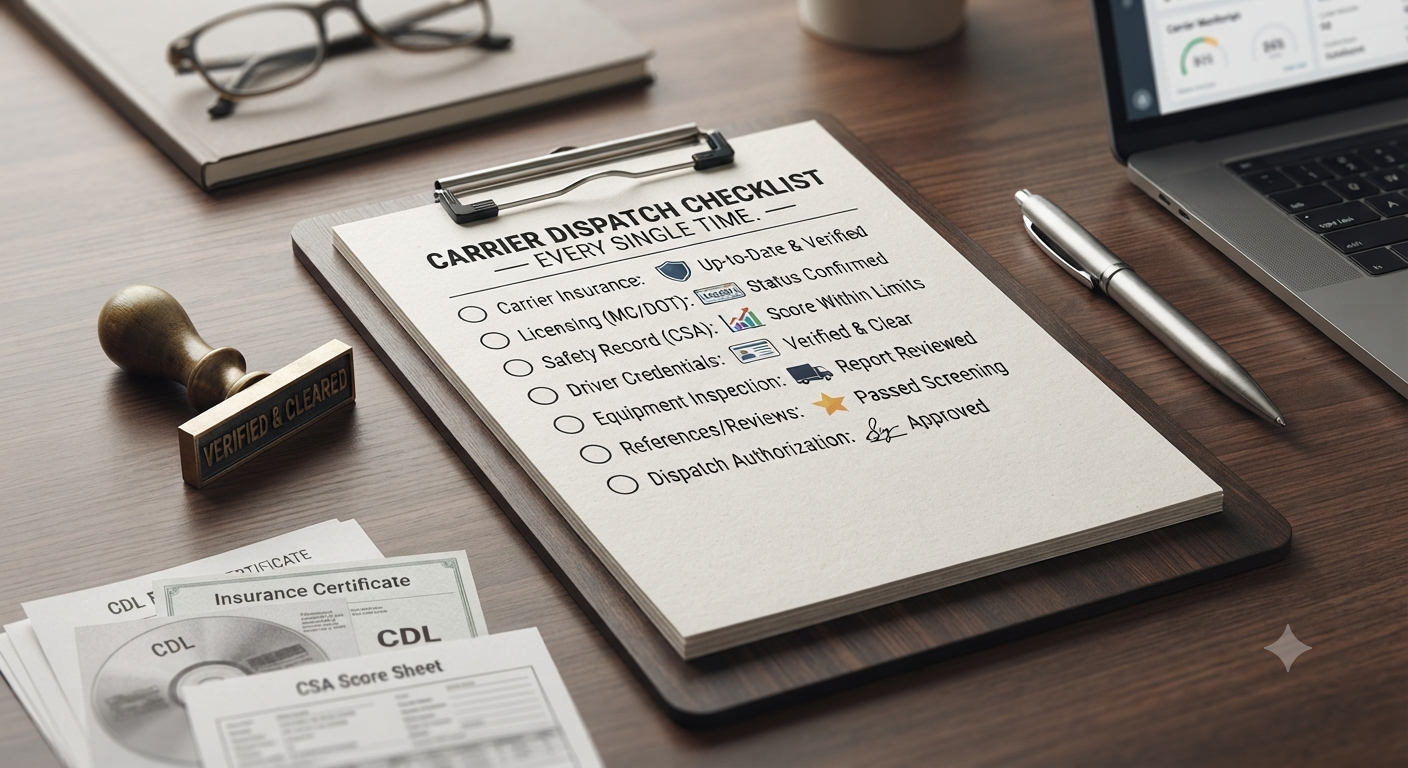
A broker with one phone number is stuck when a shipment goes quiet. A professional brokerage with real carrier relationships — dispatch, ownership, the kind of access that comes from actually vetting who you work with — is not.
A driver not answering is a dead end if that's the only number you have. Dispatch is the next call. But the one that actually moves things is the owner — nobody protects a company's reputation harder than the person whose name is on the authority. Drivers who won't call a broker back will call the owner back. Accountability shows up at the ownership level that never existed at the driver level.
Tracking sharpens that escalation. "Your driver hasn't moved in six hours" gets a faster response than "have you heard from your driver." But it only works alongside the contacts, not instead of them — plenty of bad owners exist too, and a carrier with a documented communication problem shouldn't get dispatched regardless of rate. When a driver is completely dark and dispatch isn't answering, whether your broker has the owner's cell is the difference between uncomfortable and frightening.
One more thing worth knowing: a stopped tracker usually isn't a problem. Drivers are legally capped at 11 hours of driving in a 14-hour window, then a mandatory 10 hours off. A carrier hauling multiple cars is making several stops, not driving straight through. That's part of why tracking earned a bad reputation in the first place — customers called drivers directly every time the tracker stopped, and no driver wants to explain a mandatory rest break five times a day. If something looks off, call your broker. That's what dispatch is for.
See It for Yourself
The most reliable tracking tool right now doesn't come from a broker at all.
A Bluetooth tracker in the glovebox at pickup — Apple's AirTag, Samsung's Galaxy SmartTag — costs about thirty dollars and gives you independent location visibility: no carrier cooperation, no broker, no third-party platform required. AirTag piggybacks on Apple's Find My network, SmartTag on Samsung's; either way, on a major interstate you're rarely out of range of a phone that can relay the ping. Several manufacturers build tracking into newer models too. Coverage varies by make and model, so check your own app before you count on it.
Two catches. A tracker that hasn't reconnected in a while can show a stale location without telling you it's stale. Manufacturer apps have gotten more reliable since, but back in 2023 I had a customer screaming at me that her car was in New Jersey, watching her car's manufacturer tracking app, when it was actually already in California — the truck pulled up to her location while she was still on the phone with me. The app had just been showing a stale reading the whole time.
And the same rule from earlier applies here too: a stopped tracker for a few hours is probably a rest break or another stop on the route, not a problem. Use it to know roughly where your car is, not as a reason to call the driver. If something looks genuinely wrong, call your broker — they can check the same shipment through the carrier's ELD, phone tracking, or the fleet manager directly.
It's not perfect. A car loaded deep on an enclosed trailer can lose signal. But it's one data point no broker, driver, or platform controls.
Put a tracker — AirTag, SmartTag, whichever matches your phone — in your glovebox, check whether your car's own tracking actually works, and pick a broker with more than one phone number for your carrier.
When we tell you tracking is live on your shipment, it will mean something specific — which platform, how it actually works, what it does not do. Not a dot on a page.
UPDATE: We now offer live tracking.
That is The Shipping Remedy.
Approved Transport Group LLC — USDOT# 9677802 | MC# 45556873 | Licensed Property Broker | Grasonville, Maryland
Frequently Asked Questions
Can I track my car during auto transport shipping?
Most brokers will tell you yes, but what that means varies widely. Some platforms — Super Dispatch is one — offer real GPS tracking backed by an active load and location services on the driver's end. Others just put a status label on a shipment with no live system behind it. Ask what platform is actually running the tracking and what happens when it isn't available, not just whether tracking exists.
What does it mean if the tracker shows my car hasn't moved in hours?
Usually nothing is wrong. Drivers are legally capped at 11 hours of driving in a 14-hour window, then a mandatory 10 hours off, and a carrier hauling multiple cars makes several stops along the route. If something looks genuinely off, call your broker instead of the driver — they can check the same shipment through the carrier's ELD, phone tracking, or the fleet manager directly.
Are AirTags or Samsung SmartTags accurate for tracking a car during shipping?
An AirTag or Samsung Galaxy SmartTag in the glovebox at pickup gives you independent location visibility with no carrier or broker cooperation required, using Apple's Find My network or Samsung's. Coverage is generally strong along major interstates, but a car loaded deep on an enclosed trailer can lose signal, and a tracker that hasn't reconnected in a while can show a stale location without indicating that it's stale.
Does my car's manufacturer tracking app work during auto transport?
Some manufacturers build tracking into newer models, and coverage varies by make and model — check your own app before you count on it. Treat what it shows as an estimate: a stale reading can display an old location without flagging that it's outdated, so a stopped or seemingly wrong location isn't necessarily a problem.
What actually protects my vehicle if a driver stops responding?
Tracking helps, but it works best paired with a broker who has real carrier relationships — dispatch and ownership contacts, not just the driver's cell number. A broker who can escalate through dispatch, or call the carrier's owner directly, can resolve a dark shipment far faster than one with a single phone number.